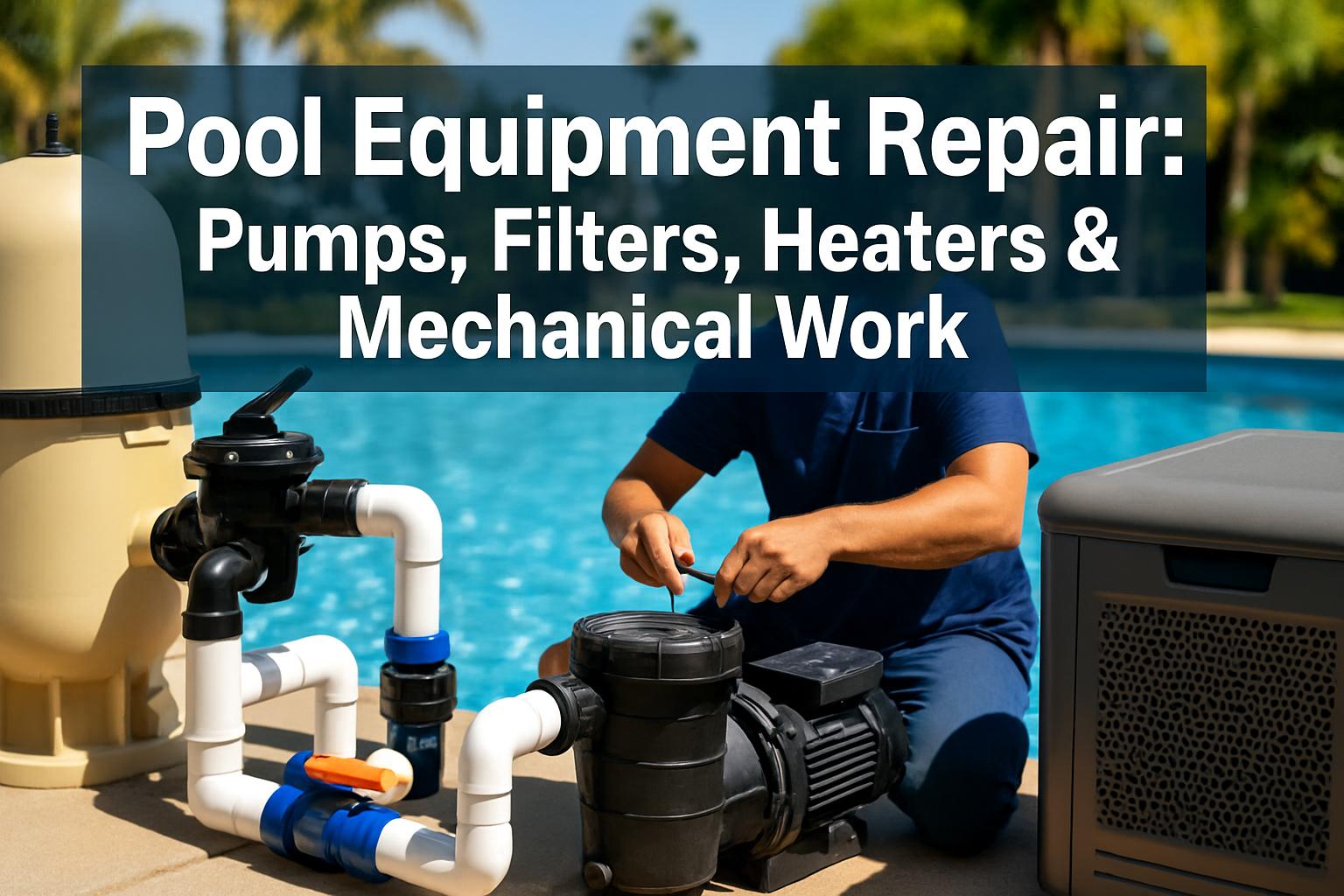
Picture this: It’s a scorching summer day in Corona, and all you want to do is take a refreshing dip in your pool. But wait—your pool equipment is on the fritz! The pump is making strange grinding noises, the water feels ice-cold despite your heater running, and the filter seems to be doing absolutely nothing. It’s a scenario nobody wants to face. That’s where understanding the ins and outs of pumps, filters, heaters and mechanical work comes into play. Whether you’re dealing with a faulty pump or a heater that just won’t heat, knowing a bit about pool equipment repair can save the day—and your summer.
Key Takeaways
✅ Regular maintenance prevents costly repairs – Small issues with pumps, filters, and heaters can escalate into expensive problems if ignored
✅ Know when to DIY and when to call professionals – Simple cleaning tasks are manageable, but electrical and mechanical work requires expertise
✅ Timely repairs extend equipment lifespan – Addressing issues promptly with your pool’s mechanical systems saves money long-term
✅ Energy-efficient equipment reduces costs – Modern variable-speed pumps and upgraded heaters significantly lower utility bills
✅ Seasonal preparation is essential – Different times of year require specific maintenance approaches for optimal pool performance
Why Pool Equipment Maintenance Matters for Homeowners
First things first, let’s talk about why maintaining your pool equipment is crucial. Pools are like cars; they need regular check-ups to function correctly. A well-maintained pool not only looks inviting but also ensures safety and extends the life of your pool equipment. Imagine inviting friends over for a BBQ and realizing your pool is more green swamp than blue oasis. Not the best look, right? 😬
Regular maintenance helps prevent those unwanted surprises. Plus, it can save you a pretty penny in the long run. Repair costs can skyrocket if small issues are left unchecked and turn into big problems. According to industry data, preventive maintenance can reduce repair costs by up to 40% compared to emergency fixes [1]. So, keeping up with maintenance isn’t just a good idea—it’s a financial necessity.
When you invest in professional pool service in Corona, CA, you’re not just paying for repairs—you’re investing in the longevity of your entire pool system. Think of it as health insurance for your backyard oasis.
Common Pool Equipment Issues: Understanding Pumps, Filters, Heaters and Mechanical Work
Let’s get the ball rolling with some common pool equipment issues you might encounter. Understanding these can help you troubleshoot and decide when it’s time to call in the pros. The three main components—pumps, filters, and heaters—work together as the circulatory and comfort systems of your pool.
🔧 Pumps and Motors: The Heart of Your Pool
Your pool pump is the heart of your pool’s circulation system. If it’s not working correctly, you’ll notice it right away. Common problems include:
- Strange grinding or squealing noises – Often indicates worn bearings
- Leaks around the pump housing – Could signal seal failure
- Pump not turning on at all – May be electrical or motor failure
- Weak water flow – Suggests impeller blockage or motor issues
- Overheating and shutting down – Points to ventilation problems or capacitor failure
Sometimes, it might be something as simple as a clogged filter basket, but other times, it could be a more significant issue like a motor failure. The good news? Modern energy-efficient pool pumps can actually reduce your energy bills by 50-75% compared to older single-speed models [2].
If you’re in doubt about pump issues, it’s always best to get a professional opinion. I’ve seen too many homeowners try to fix electrical components themselves, only to create bigger safety hazards.
🌡️ Heaters: Keeping Your Comfort Level Perfect
There’s nothing worse than jumping into a pool expecting it to be warm only to feel like you’ve plunged into an ice bath. Pool heaters can stop working for various reasons:
| Heater Problem | Possible Cause | DIY or Pro? |
|---|---|---|
| Won’t ignite | Pilot light issue, gas supply problem | Professional |
| Runs but doesn’t heat | Thermostat malfunction, flow sensor | Professional |
| Frequent cycling | Dirty filter, incorrect settings | DIY first |
| Error codes displayed | Various electrical/mechanical issues | Professional |
If your heater isn’t working, check the settings and ensure it’s receiving power. Verify that your filter is clean (dirty filters restrict flow and prevent heaters from operating). If everything looks good and it’s still not heating, it might be time to call in the experts who specialize in mechanical work on pool heating systems.
💧 Filters: Your Pool’s Cleaning Powerhouse
Filters do the heavy lifting in keeping your pool water clean. If they’re not working right, you’ll likely notice cloudy water or debris floating around. There are three main types of pool filters:
- Sand filters – Require backwashing when pressure rises 8-10 PSI above normal
- Cartridge filters – Need regular cleaning and replacement every 1-2 years
- DE (Diatomaceous Earth) filters – Most efficient but require careful maintenance
A common issue is a clogged filter, which can often be resolved with a good cleaning. However, if the problem persists after cleaning, it may be time to replace the filter altogether. Remember, a clogged filter doesn’t just affect water clarity—it also puts extra strain on your pump, potentially shortening its lifespan.
For those with saltwater pool systems, filter maintenance becomes even more critical due to the unique chemistry involved.
DIY vs. Professional Repair: Making the Right Choice
Now, you might be thinking, “Can I handle these repairs myself?” Well, it depends. Some issues can be an easy fix, like cleaning a filter or adjusting a setting. But for more complex problems, especially those involving electrical components and intricate mechanical work, it’s wise to call a professional. Safety first, folks! ⚠️
When DIY Makes Sense
You can probably handle these tasks:
- Cleaning filter cartridges or backwashing sand filters
- Clearing debris from pump baskets and skimmers
- Adjusting timer settings and thermostats
- Checking and resetting circuit breakers
- Lubricating O-rings and gaskets
- Basic visual inspections
When to Call the Professionals
Leave these to the experts:
- Any electrical repairs or wiring issues
- Motor replacement or bearing repairs
- Gas heater repairs (safety hazard!)
- Plumbing leaks requiring pipe replacement
- Control board or automation system issues
- Warranty-covered repairs (DIY may void warranty)
DIY repairs can save money, but they also come with risks. If you’re not comfortable tinkering with pool equipment, it’s best to leave it to someone who knows what they’re doing. Plus, professionals can spot issues you might miss, ensuring your pool is not just functioning but thriving.
I always recommend checking out resources like the Corona Swimming Pool Service blog for helpful maintenance tips that can guide your DIY efforts while knowing when to step back.
Choosing the Right Repair Service for Pumps, Filters, Heaters and Mechanical Work
So, you’ve decided to call in the cavalry. How do you pick the right pool repair service in Corona? Here are a few tips to help you make the best choice:
Experience and Expertise 🎓
Look for a service with a solid track record and plenty of experience. A company that’s been around for a while will likely have seen every problem under the sun and know how to fix it efficiently. Ask specifically about their experience with pumps, filters, heaters and mechanical work—these are the core systems that keep your pool running.
Customer Reviews and Testimonials ⭐
Check out what others are saying. Customer reviews can give you insight into the service’s reliability and quality of work. Sites like Yelp or Google Reviews are great places to start. Look for patterns in reviews—consistent praise for punctuality, fair pricing, and quality work are all good signs.
Certifications and Insurance 📋
Ensure the company is certified and insured. This not only protects you but also ensures the technicians are qualified to handle your repair needs. Reputable companies will gladly provide proof of:
- State contractor’s license
- Liability insurance
- Workers’ compensation coverage
- Manufacturer certifications for specific equipment brands
A qualified pool service provider in Corona should have all these credentials readily available.
Transparent Pricing and Warranties 💰
Beware of services that can’t provide upfront estimates or seem vague about pricing. Quality repair services offer:
- Free or low-cost initial inspections
- Detailed written estimates before work begins
- Clear warranty terms on parts and labor
- No hidden fees or surprise charges
Preventive Maintenance Tips: Protecting Your Investment
Of course, the best way to avoid costly repairs is with preventive maintenance. Here are some quick tips to keep your pool equipment in tip-top shape:
Regular Inspections 🔍
Make it a habit to inspect your pool equipment regularly. Look for signs of wear and tear or anything that seems out of the ordinary. Create a simple monthly checklist:
- ✅ Check pump for leaks, unusual noises, or vibrations
- ✅ Inspect filter pressure gauge (clean when 8-10 PSI above normal)
- ✅ Test heater operation and verify temperature accuracy
- ✅ Look for rust, corrosion, or loose connections
- ✅ Ensure proper ventilation around equipment
Keep It Clean 🧹
Clean your filters regularly and ensure the area around your equipment is free of debris. This helps prevent clogs and keeps everything running smoothly. For cartridge filters, I recommend hosing them down every 2-4 weeks during peak season. For sand filters, backwash when the pressure gauge indicates it’s time.
Don’t forget about your pump basket—it should be emptied at least weekly during heavy use periods.
Check Water Levels and Chemistry 💧
Maintaining the right water level is crucial for your equipment to function correctly. Too low, and the pump might run dry and burn out; too high, and you might have overflow problems affecting your mechanical systems.
Proper water chemistry also protects your equipment:
- Balanced pH (7.2-7.6) prevents corrosion of metal components
- Proper alkalinity protects heater heat exchangers
- Correct calcium hardness prevents scale buildup in filters and heaters
Optimize for Energy Efficiency ⚡
Did you know that your pool pump can account for up to 25% of your home’s energy consumption [3]? Consider these energy-saving strategies:
- Upgrade to a variable-speed pump (can save $300-500 annually)
- Run your pump during off-peak electricity hours
- Reduce run time to the minimum needed for your pool size
- Use a pool cover to reduce heating costs by 50-70%
Check out these 15 breakthrough pool pump efficiency tips to slash your energy bills in 2025.
The Role of Timely Repairs in Pool Longevity
Repairing pool equipment isn’t just about fixing what’s broken; it’s about understanding how each component contributes to the overall system. Your pool’s longevity depends on the health of its equipment. For example, neglecting a small leak in your pump can lead to significant water loss, increased utility bills, and even more extensive damage to your pool’s infrastructure.
“An ounce of prevention is worth a pound of cure. This couldn’t be more true when it comes to pool equipment maintenance. Small repairs today prevent major replacements tomorrow.”
Timely repairs also play a vital role in maintaining the aesthetic appeal of your pool. Nobody wants to swim in a pool with murky water or visible debris. By ensuring that your pumps, filters, and heaters are operating efficiently, you can keep your pool water crystal clear and inviting for swimmers.
The Domino Effect of Neglected Equipment
When one component fails, it often creates a cascade of problems:
- Failed pump → Poor circulation → Algae growth → Filter overwork → Premature filter failure
- Clogged filter → Increased pump strain → Motor burnout → Expensive replacement
- Broken heater → Inconsistent temperatures → Reduced pool usage → Wasted investment
Understanding these connections helps you appreciate why comprehensive pool maintenance and repair services are so valuable.
Environmental Considerations in Pool Maintenance
In today’s world, environmentally-friendly practices are more important than ever, and pool maintenance is no exception. By optimizing your pool equipment’s efficiency, you can reduce energy consumption and minimize your environmental footprint. For instance, regularly servicing your pool pump ensures it doesn’t have to work harder than necessary, saving both energy and money.
Consider investing in energy-efficient equipment when possible. Modern pumps and heaters often come with energy-saving features that not only reduce carbon emissions but also lower your utility costs. Here are some eco-friendly options:
Green Pool Equipment Choices 🌱
- Variable-speed pumps – Use up to 80% less energy than single-speed models
- Solar pool heaters – Harness free energy from the sun with minimal operating costs
- LED pool lights – Use 75% less energy than traditional incandescent bulbs
- Automated pool cleaners – Like the Pentair Rebel pool cleaner, which efficiently cleans while reducing pump run time
- Pool covers – Reduce water evaporation by 95% and heat loss by 70%
The variable-speed pump technology available in 2025 is remarkably advanced, allowing you to program different speeds for different tasks—high speed for vacuuming, medium for filtering, and low for circulation.
Seasonal Maintenance and Preparation
Different seasons bring different challenges for pool maintenance. In Corona, where summers can be particularly intense, ensuring your pool is ready for peak usage is crucial. Before the summer season kicks in, it’s wise to have a thorough inspection and servicing of your pool equipment. This preparation helps catch any issues before they become major problems during the busiest swimming months.
Spring: Getting Ready for Swimming Season 🌸
- Inspect all equipment for winter damage
- Replace worn O-rings and gaskets
- Service heater before first use
- Check pump motor and lubricate as needed
- Clean or replace filter media
- Test all automation and control systems
Summer: Peak Performance Maintenance ☀️
- Monitor equipment daily for unusual sounds or performance
- Clean filters more frequently due to heavy use
- Check chemical levels twice weekly
- Ensure adequate ventilation around equipment
- Watch for signs of strain on pumps and motors
Fall: Preparing for Reduced Use 🍂
- Reduce pump run times as temperatures drop
- Deep clean filters before winter
- Inspect heater if you plan winter swimming
- Clear leaves and debris from equipment area
- Consider equipment covers for protection
Winter: Protecting Your Investment ❄️
Even in Corona’s mild winters, protection matters:
- Reduce filtration time but maintain circulation
- Monitor freeze risk on rare cold nights
- Keep equipment area clear of debris
- Consider heater maintenance during off-season
As the seasons change, your maintenance routine should adapt accordingly. This seasonal approach ensures your pool is in optimal condition year-round. For comprehensive seasonal care, consider partnering with a professional pool service in Corona.
Advanced Troubleshooting for Common Equipment Problems
Let’s dive deeper into some specific troubleshooting scenarios you might encounter with your pumps, filters, heaters and mechanical work:
Pump Won’t Prime or Loses Prime
Symptoms: Pump runs but doesn’t move water, or stops moving water after running
Common causes:
- Air leaks in suction side plumbing
- Clogged impeller
- Low water level in pool
- Damaged pump lid O-ring
- Clogged skimmer or pump basket
Solutions: Check water level first, then inspect and clean all baskets. Examine the pump lid O-ring and replace if cracked. If problems persist, check for air leaks by running the pump and looking for bubbles in the pump basket.
Filter Pressure Too High or Too Low
High pressure issues:
- Dirty filter media (clean or backwash)
- Closed or partially closed valves
- Clogged return lines
Low pressure issues:
- Clogged pump basket or impeller
- Air leak on suction side
- Broken pressure gauge (verify with new gauge)
Heater Cycles On and Off Frequently
This “short cycling” wastes energy and indicates a problem:
- Dirty filter restricting flow
- Incorrect thermostat setting
- Faulty flow sensor
- Undersized heater for pool volume
- Clogged heat exchanger (requires professional cleaning)
Educational Resources and Community Support
One of the best ways to stay on top of pool maintenance is by educating yourself and connecting with a community of pool owners. There are numerous online resources, forums, and local workshops dedicated to pool care. Engaging with these can enhance your understanding of pool equipment repair and maintenance, making you more confident in handling minor issues yourself.
Valuable Learning Resources 📚
- Manufacturer websites – Pentair, Hayward, and Jandy offer excellent troubleshooting guides
- YouTube channels – Visual demonstrations of repair techniques
- Pool owner forums – TroubleFreePool and PoolForum offer community advice
- Local workshops – Many pool supply stores offer free maintenance classes
- Professional blogs – Like the Corona Swimming Pool Service blog, which provides expert insights
Additionally, participating in community discussions and sharing experiences with fellow pool owners can provide valuable insights and tips. You’ll discover new products, learn about common pitfalls, and find recommendations for reputable repair services in Corona.
Building Your Pool Knowledge Base
I always encourage homeowners to keep a pool maintenance journal documenting:
- Equipment model numbers and installation dates
- Maintenance performed and dates
- Chemical readings and adjustments
- Problems encountered and solutions
- Seasonal opening and closing procedures
- Contact information for reliable service providers
This record becomes invaluable when troubleshooting issues or discussing problems with repair technicians.
Cost Considerations: Repair vs. Replace
One of the toughest decisions pool owners face is whether to repair aging equipment or replace it entirely. Here’s a helpful framework for making this decision:
The 50% Rule
If repair costs exceed 50% of replacement cost AND the equipment is past 50% of its expected lifespan, replacement usually makes more financial sense.
Expected Equipment Lifespans
| Equipment | Average Lifespan | Replacement Threshold |
|---|---|---|
| Pool pump motor | 8-12 years | After 6-7 years |
| Gas heater | 7-10 years | After 5-6 years |
| Heat pump | 10-15 years | After 8-10 years |
| Sand filter | 10-15 years | When tank shows corrosion |
| Cartridge filter | 5-7 years | When cartridges need frequent replacement |
| DE filter | 10-15 years | When grids tear repeatedly |
Hidden Costs of Old Equipment
Don’t forget to factor in:
- Higher energy costs – Old pumps use significantly more electricity
- Frequent repairs – Multiple service calls add up quickly
- Reduced efficiency – Older heaters take longer to heat your pool
- Warranty coverage – New equipment comes with warranties that save money
Sometimes, investing in new energy-efficient equipment pays for itself within 2-3 years through reduced utility bills.
The Future of Pool Equipment Technology
As we move through 2025, pool equipment technology continues to advance. Here are some exciting developments in pumps, filters, heaters and mechanical work:
Smart Pool Technology 📱
- WiFi-enabled pumps – Control and monitor from your smartphone
- Automated chemical systems – Maintain perfect water chemistry automatically
- Smart heaters – Learn your usage patterns and optimize heating schedules
- Integrated automation – Single app controls all pool functions
Energy Innovations
- Ultra-efficient variable-speed pumps – Even more savings than previous generations
- Hybrid heating systems – Combine solar, heat pump, and gas for optimal efficiency
- Advanced filtration – New media types filter finer particles with less pressure drop
Sustainability Focus
The pool industry is increasingly focused on water conservation and energy efficiency. New equipment designs minimize water waste, reduce chemical usage, and maximize energy efficiency—good for both your wallet and the planet.
Staying informed about these pool maintenance and technology trends helps you make smart upgrade decisions.
Conclusion: Your Path to a Perfectly Maintained Pool
Maintaining your pool’s equipment is an ongoing process that requires attention, knowledge, and sometimes professional help. By understanding the importance of regular maintenance and repairs for your pumps, filters, heaters and mechanical work, choosing the right professionals, and staying informed about best practices, you can ensure a long-lasting and enjoyable pool experience.
Remember, a well-maintained pool not only serves as a centerpiece for entertainment and relaxation but also adds significant value to your property. Studies show that well-maintained pools can add 7-15% to home values in warm climates [4].
Your Action Plan 📝
This week:
- Inspect your pool equipment for obvious issues
- Clean your filter and pump baskets
- Check and record your filter pressure gauge reading
- Test your heater operation
This month:
- Schedule a professional inspection if you haven’t had one recently
- Review your equipment maintenance logs
- Research energy-efficient upgrade options
- Join an online pool owner community
This year:
- Develop a comprehensive seasonal maintenance schedule
- Budget for anticipated equipment replacements
- Consider upgrading to energy-efficient equipment
- Build a relationship with a trusted pool service provider
So take the time to care for your pool equipment, embrace preventive strategies, and engage with the pool community. Doing so will ensure that your pool remains a sparkling oasis, providing joy and refreshment for years to come. And remember, when issues arise that are beyond your comfort level, don’t hesitate to reach out to professionals who specialize in pumps, filters, heaters and mechanical work—it’s an investment that pays dividends in peace of mind and pool longevity.
Happy swimming! 🏊♂️💙
References
[1] Pool & Spa News Industry Report, “The Economics of Preventive Pool Maintenance,” 2025
[2] U.S. Department of Energy, “Energy-Efficient Pool Pumps,” Energy.gov, 2025
[3] California Energy Commission, “Residential Pool Pump Energy Use Study,” 2025
[4] National Association of Realtors, “Impact of Pool Features on Home Values,” 2025